Detalles

On 30 October, Chile pulled out of hosting the UN climate summit due to the protests raging across the country; two days later, it was confirmed that Madrid would host the summit instead. This announcement was immediately followed by a flurry of communication between Chilean and Spanish (climate) activists. How would they ensure that critical Chilean voices retained their prominence at this COP—which was supposed to have been a Latin American one? How could an alternative summit be mounted in Madrid in just four weeks? How might cooperative links be established between actions at the summit and demonstrations in Chile and Spain? Who would still travel to Santiago, and who would now journey to Madrid? Who would organize which events where, meet which allies, organize which protests?
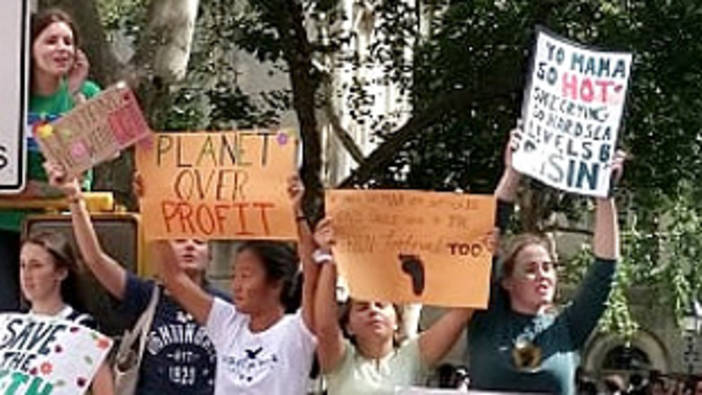
In both Santiago de Chile and Madrid, the answer is clear: both cities possess civic networks that are strong and creative, and that pull together. Hundreds of volunteers in Santiago and Madrid have put massive amounts of energy into organising three major multi-day events—each adequately funded and allocated sufficient space, provided with accommodation, catering, and translation services, and accompanied by a full programme incorporating art and culture, and often culminating in demonstrations—sometimes at very short notice. In Chile, around 600 people have come together under the slogan #NoHayCOPSiHayCumbre (This is no COP—this is a people’s summit!) at the “Cumbre de los Pueblos 2019” (link to Facebook) and “Cumbre Social por la Acción Climática” events, while the “Cumbre Social por el Clima” in Madrid is being attended by around 1000 participants. The streets have also been full of people: despite the governmental repression of recent weeks, 30,000 people took to the streets in Santiago on December 6, and in Madrid half a million were present for the “Global March for the Climate”.
Strengthening Organization and Formulating Demands
In Santiago de Chile, the primary subject of discussion has been the role of communities in the fight against the climate crisis, with other conversations also exploring topics such as the fundamental critique of extractivist economic models, the development of alternative climate-friendly social structures, and how best to make space for migrants in the struggle. “In recent weeks we’ve been testing new organizational forms and new ways of approaching the political system. Now we’re deepening these approaches, discussing them further, and translating them into demands”, explains Lucio Cuenca of the environmental group OLCA, a partner organization of the Rosa-Luxemburg-Stiftung and one of the main groups behind the “People’s Summit”. “Following the Chilean president’s decision to abdicate responsibility for the consequences of his policies, we want to consolidate our demands and develop counter-strategies”, he adds. Discussions continue to focus on people’s expectations and perspectives in relation to the constituent assembly, which, following a hotly-debated agreement between the government and a majority of opposition parties, is set to be elected in 2020. The particulars of the assembly are still to be ironed out.