
Detalles
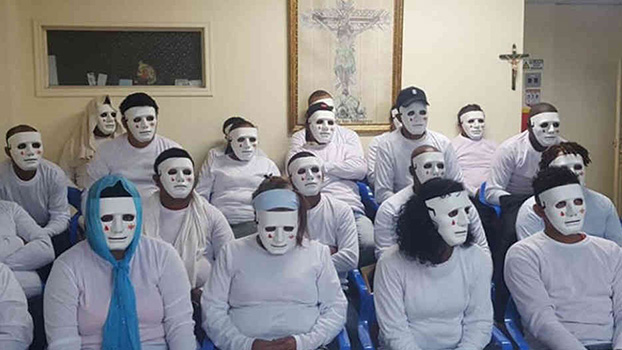
Quelle: Comisión Intereclesial de Justicia y Paz
The violence against leftist social movements in Colombia persists, and has even intensified under the right-wing President Iván Duque, who is an opponent of the peace agreement with the FARC.[1] Nevertheless, protests against his neoliberal and repressive politics continue to take place. The different social groups and movements now want to join forces in order to effect sustainable social changes.
Disappointed hopes
In 2016, it seemed like a great opportunity had opened up for Colombia’s social movements. In its peace agreement with the FARC guerrillas the state promised to implement a legal process for dealing with the decades-long conflict, tackle social inequality, and facilitate more political participation. Some people in Indigenous peoples’ and Afro-Colombian organizations, as well as in left-wing grassroots movements, believed that this could lead to the opening up and broadening of democracy, allow for political engagement without the risk of death, and, in the long term, pave the way to toppling the existing power structures. In short, there was hope of fundamentally transforming Colombia, perhaps even with the help of a future left-wing government. Two and a half years later the prospects are sobering. Currently the country is not on the way to the “stable and long-lasting peace” promised by the agreement.[2]
The military stage of the decades-long armed conflict between the Colombian military and the FARC is over. Nevertheless, forced displacement, death threats, and targeted murders are a part of everyday life. Areas where the FARC has withdrawn and left a power vacuum, in particular, experience armed conflicts over territorial control between drug gangs, paramilitary groups, ELN guerrillas,[3] dissidents from the former FARC,[4] and state security forces.