To start page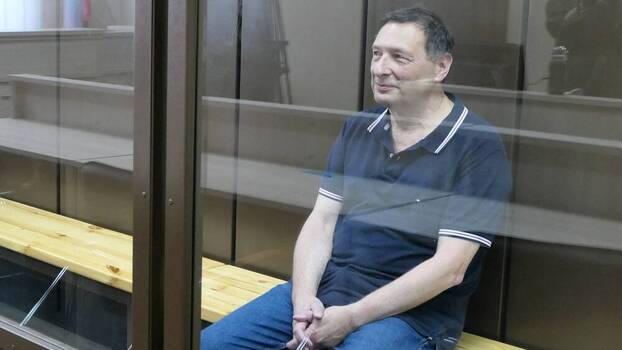
On 25 July 2023, a case was opened against the internationally known Russian left-wing intellectual Boris Kagarlitsky for “justifying terrorism”. His arrest triggered an unexpectedly broad response across Russia. Representatives of various political spectrums, even beyond the Left, reacted to his arrest and indictment. These include the Russian Socialist Movement, the Social Democrats of Russia, the Union of Delivery Drivers and Couriers, the Navalny-affiliated media portal Meduza, and the pro-Kremlin Telegram channel Nezygar, and others. Neither the Communist Party of the Russian Federation (CPRF) nor its allies have issued a statement.
Lutz Brangsch is a research fellow at the Rosa Luxemburg Foundation’s Institute for Critical Social Analysis.
Translation by Loren Balhorn.
The investigation against Kagarlitsky was initiated by the secret service of the Komi Republic in north-west Russia, which is known among oppositionists for the fact that its actions often form the point of departure for similar actions throughout the country. Many now fear that a new, more intense wave of repression could now be brewing against the Left in general. A number of other left-wing activists have already been interrogated in connection with the investigation against Kagarlitsky. Mikhail Lobanov and Yevgeny Stupin, two other well-known leftists, already faced similarly questionable accusations in recent months. What unites the three is their desire to create a broad left movement.
As an author, scholar, and activist, Kagarlitsky has grappled with the nature of the Russian political system and the challenges it poses to left-wing movements in the country for decades. He was a left-wing dissident in the Soviet Union, which earned him conviction and imprisonment. He was politically active during perestroika and in the early 1990s, working for trade unions and taking part in the founding of the Party of Labour. Throughout this period, he was also active in teaching and research at various academic institutions.
In the early 2000s, he played a leading role in founding the Institute for Globalization Studies and Social Movements (IGSO) and the journal Levaya Politika. Later on, he developed an internet portal comprising a website, YouTube, and Telegram channel called Rabkor, where scholarship and political activism overlap. The name says it all: it derives from the name for people who worked as so-called “workers’ correspondents” in the Soviet era, RABochy KORrespondenty. He was and remains well-connected internationally, as the numerous reactions to his arrest from various international left-wing movements show.
The breadth of his interests and activities certainly explains why his arrest attracted so much attention. Even for groups that do not share his Marxist approach, he is an important point of reference in his analytically based opposition to the status quo in Russia. The move against Boris Kagarlitsky can therefore be seen as another blow to the last possibilities of even identifying and analysing social problems in the country. The action has highlighted the level of everyday repression that opponents of the war, feminists, LGBT advocates, and opposition activists of various political persuasions face in Russia today. Solidarity with Kagarlitsky should therefore also include the many political prisoners and refugees in and from Russia who do not enjoy the privilege of having a famous name.