Jump to main content

Dossier: Socialize This!

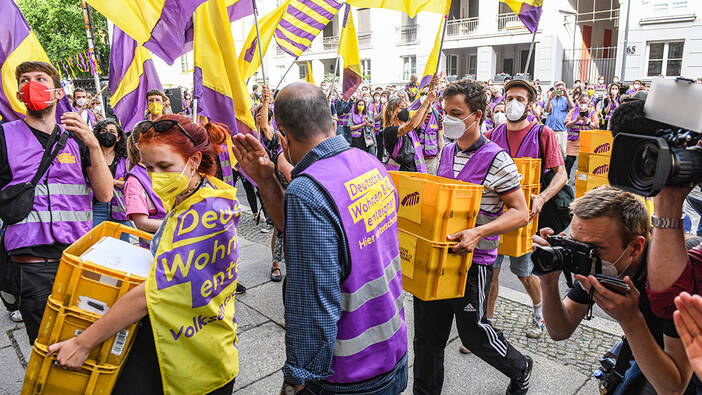
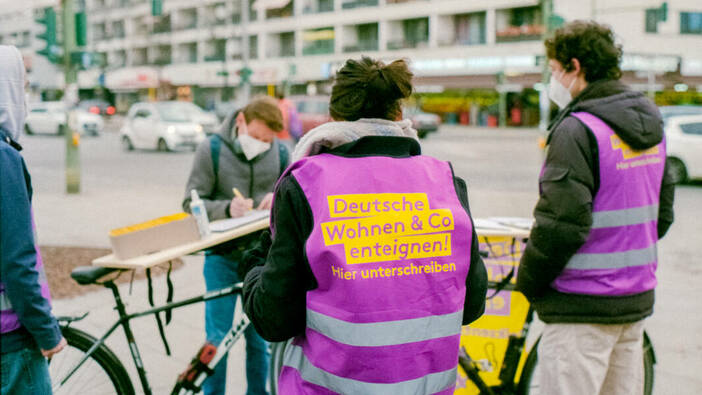
Since over one million Berlin voters cast their ballot in favour of the “Deutsche Wohnen & Co. enteignen” initiative last September, questions about the distinction between public and private property and how to socialize key economic sectors have surged to the forefront of public debate in Germany.

But socialization means a lot more than just taking private property into state hands. Crucial as it may be, that formal legal act merely represents an initial step in a much deeper process of democratizing important sectors of social production and reproduction, making them answer to the needs of the majority rather than the interests of a few wealthy owners. Ultimately, we need more than just a “de-privatization” of economic life: given the limited amount of natural resources on our planet and the need to transition to a more equitable and simultaneously sustainable mode of distribution, what socialization has to mean is a thoroughgoing transformation of how we live, work, and reproduce the world we live in.


Content on this topic

Out­lining a Fem­in­ist Hous­ing Policy

: Essay 16.09.2024

To address the disproportionate impacts of the housing crisis on women, we must tackle the root of…

Caring Cit­ies

What would a city look like that prioritizes the needs of all of its residents, and how would we get there?

Trans­form­ing the Pub­lic into the Com­mons

: Comment 25.04.2024

What strategies can social movements learn from the New Municipalist wave?

Com­mon­ing the Pub­lic

: Studies 03/2024

Translating European New Municipalism to the UK context

The Path to So­cial­iz­a­tion Is Clear

: Policy Papers 10/2023

The Expert Commission report lays out the legal means to expropriate Berlin’s biggest landlords

Our Law, Our Home, Our Ber­lin

: Comment 04.10.2023

Why the “Deutsche Wohnen & Co enteignen” initiative is launching a second referendum

So­cial­iz­ing Hous­ing Cuts the Rent

: Studies 02/2023

A brief study outlining the positive impacts of socializing Berlin’s housing stock

So­cial­ize Care Work!

: Analysis 29.04.2022

In “Caring Cities”, the needs of residents would be the heart of urban policy

Who Owns the City?

Uncovering the business models and practices of real estate companies in Berlin

Be­lieve the Hype!

: Essay 10.02.2022

Why socialization can be a compass for renewing the Left in Germany

From Over-So­cial­iz­a­tion to the So­cial­ist-Ori­ented Mar­ket Eco­nomy

: Interview 07.02.2022

How the Doi Moi reforms redefined the role of public property in Vietnam’s economic development

Ex­pro­pri­ation Means Giv­ing Every­one a Slice of the Pie

: Comment 07.02.2022

Many assume that expropriation means losing something, but in reality, collective ownership would…

“We Had to Step Out­side Our Com­fort Zone”

: Interview 04.02.2022

A conversation with Deutsche Wohnen & Co. Enteignen activists Jenny Stupka and Nina Scholz

The Price of So­cial­iz­a­tion

: Analysis 02.02.2022

After winning the referendum, how can the expropriation of Deutsche Wohnen be financed?

So­cial­iz­a­tion — And Then What?

: Interview 02.02.2022

Ulrike Hamann and Alex Demirović on the nuts and bolts of socialized housing and beyond

What Can Art­icle 15 Do?

: Interview 02.02.2022

Socialization is not only popular, but — as far as the German constitution is concerned — perfectly…

Bey­ond Dis­rup­tion

: Analysis 03.11.2021

How reclaimed utilities can help cities meet their climate goals

A Blue­print for a Left That Wins

: Comment 28.10.2021

The Berlin referendum to expropriate big landlords shows how to organize majorities