 To start page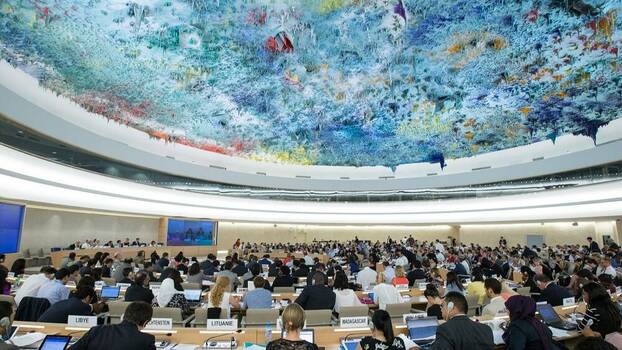
Since 2014, the United Nations Human Rights Council in Geneva has been negotiating an internationally binding agreement on business and human rights — also known as the UN Treaty. From October 24–28 2022, the intergovernmental working group on a legally binding instrument on transnational corporations and other business enterprises with respect to human rights (OEIGWG) met for the eighth time. The countries of the global South as well as the major industrialized nations were present at the meeting.
Karolin Seitz is the Director of Global Policy Forum’s Business & Human Rights Programme. Since its start in 2014, she has closely followed the process towards a UN Treaty on Business and Human Rights.
With the G7’s commitment in June 2022 to an international binding standard on business and human rights, the formation of the “Friends of the Chair” group within the negotiations, the US government now co-negotiating, and the prospect of a European Union negotiating mandate, the process has gained new weight and momentum.
The Rosa Luxemburg Foundation has been observing and following this process at the United Nations for many years and regularly reports on developments in cooperation with the Global Policy Forum.