 To start page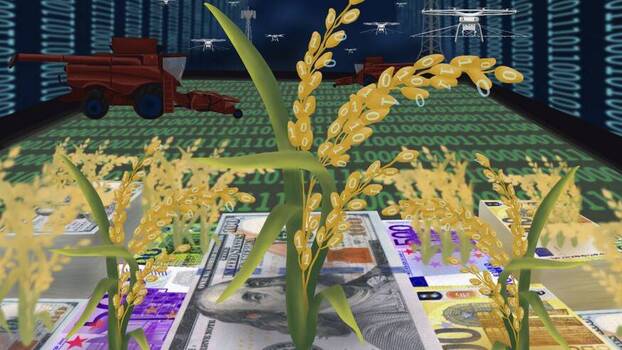
Cashing In on the Climate Crisis through Agricultural Digitalization, a new study from the ETC Group produced with support from the Rosa Luxemburg Foundation, explores how the climate crisis is being turned into an investment opportunity for financial actors, and how agricultural digitalization is facilitating the commodification of climate into assets that can be traded. It highlights cases from Malaysia, Indonesia, and the Philippines.
The Action Group on Erosion, Technology and Concentration (ETC Group) focuses on socioeconomic and ecological issues surrounding new technologies. It investigates ecological erosion but also of cultures and human rights, researches new technologies, and monitors global governance issues including corporate concentration and trade in technologies.
The study’s findings show the proliferation of “green” financial instruments like green bonds, promotion of carbon farming to generate carbon credits and for offsets, increasing speculation in carbon trading especially via the introduction of blockchain, and the growing interest of sovereign wealth funds in food- and agriculture-related technologies. It also highlights the ways in which governments, regional institutions, and inter-governmental initiatives are facilitating the financialization of climate by promoting and enabling digital technologies in agriculture and carbon trading.
The use of agricultural digitalization to create or enable financial instruments and assets using the climate crisis as justification is a nefarious strategy to evade any real action on the climate crisis while increasing revenue streams, pushing a positive public image on the climate front, and expanding and entrenching control over food and agriculture. Beyond the green veneer, these technologies are actually carbon-intensive, and their sustainability claims are highly dubious. They turn farmers into data extractors, locking them into practices dictated by corporations, undermining farmers’ rights and autonomy, and are used by these corporations to keep emitting greenhouse gasses.
Financialization of climate through agricultural digitalization is yet another means of monetizing data extracted from farmers, their fields, and nature, powered by digital technologies that are dependent on extraction of natural resources. These technologies are far from neutral, inherently top-down, and rarely developed in the interests of smallholder farmers. Instead of pushing for tricks and false solutions that distract attention from real solutions to the climate crisis, the Global North and corporations should pay reparations that could be used to advance community-based mitigation and adaptation actions such as agro-ecological approaches in food production and the promotion of dynamic territorial markets without sacrificing biodiversity, the environment, and peoples’ rights.